


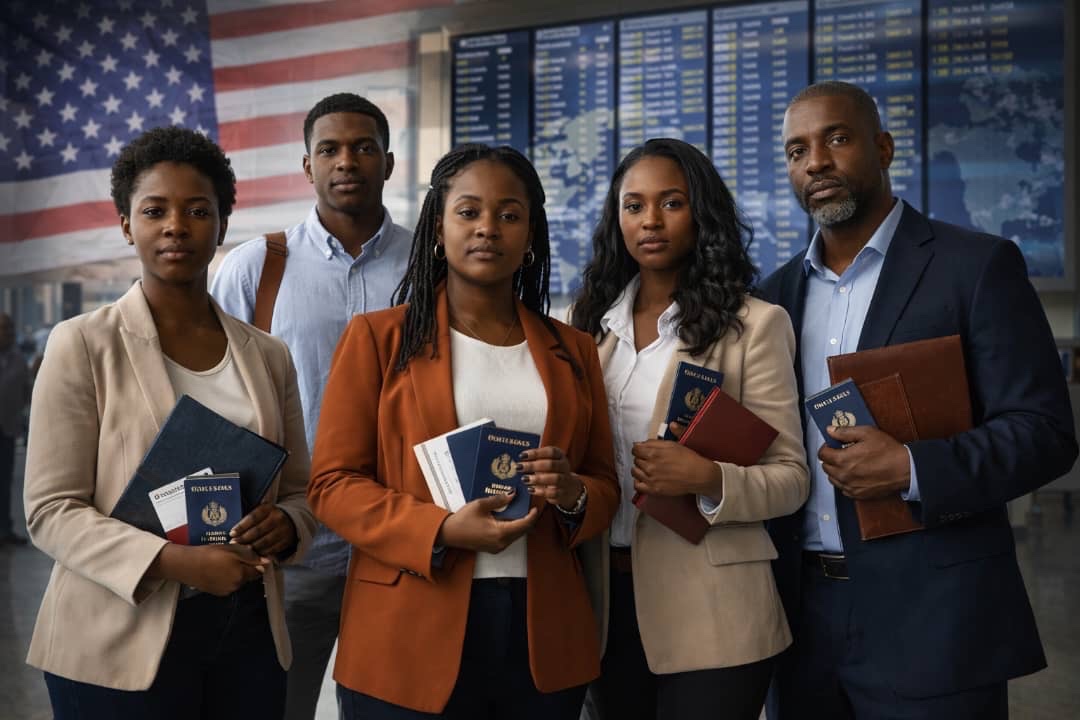
Understanding U.S. Immigration For Black Communities Seeking A New Life In America
For many people in the Black community across Africa and the global diaspora, the United States represents opportunity, safety, education, and career growth. Yet U.S. immigration can feel confusing and intimidating, especially for first time applicants who have never dealt with visas, embassies, or legal immigration terms. Understanding how the system works is the first step toward making informed and realistic decisions. U.S. immigration is not one single process. It is a collection of different legal paths, each with its own rules, timelines, and risks. Knowing the language used in immigration discussions helps people avoid scams, false hopes, and costly mistakes.
When people talk about relocating to the United States, they usually mean entering legally through a visa or protection program. A visa is not automatic permission to live in the U.S. It is a travel document placed in your passport that allows you to arrive at a U.S. airport or border and request entry. The final decision is always made by U.S. border officers. There are two broad types of visas. Non immigrant visas are temporary. Immigrant visas are for people who want to live permanently.
Non immigrant visas are the most common starting point. A tourist visa allows short visits for travel or family reasons but does not allow work. A student visa is for people admitted into American schools or universities and comes with strict rules about work and study duration. Work visas are given to people with specific skills, job offers, or professional qualifications, often sponsored by a U.S. employer. Exchange visas are for cultural programs, internships, or research. These visas are temporary and usually require the holder to return home after the program ends.
Immigrant visas are for people who want permanent residence. Permanent residence is commonly called a green card. A green card allows a person to live and work in the U.S. without needing a separate work permit. It also allows travel in and out of the country under certain conditions. Green cards are usually obtained through family sponsorship, employment sponsorship, humanitarian protection, or special programs like the diversity visa lottery, often called the green card lottery. Winning the lottery does not guarantee entry but gives the chance to apply.
Asylum is one of the most misunderstood immigration terms. Asylum is not a general relocation option. It is a protection granted to people who are already in the U.S. or at a U.S. border and who fear serious harm in their home country. The fear must be linked to race, religion, nationality, political opinion, or belonging to a specific social group. Economic hardship alone does not qualify. Asylum cases require strong evidence, long interviews, and often years of waiting. During this time, applicants live with uncertainty and limited rights.
Refugee status is similar to asylum but is applied for outside the United States. Refugees are screened before arrival and admitted through international programs. This path is usually reserved for people fleeing war or extreme persecution and is not something individuals can easily apply for on their own without international referrals.
Another key term is adjustment of status. This refers to applying for a green card while already inside the United States. Consular processing refers to applying for a visa or green card from outside the U.S. through an embassy. Public charge is a term used when immigration officers assess whether an applicant is likely to depend on government assistance in the future. Financial stability matters more today than ever before.
Citizenship is the final stage for many immigrants. After living in the U.S. as a green card holder for a number of years and meeting legal requirements, a person can apply for naturalization. Citizenship grants full rights, including voting and holding certain public offices.
In recent years, the way U.S. immigration works has changed significantly. Today, the process is more restrictive, slower, and more closely monitored than before. Visa suspensions have affected nationals of several countries, including some in Africa and the Caribbean. These suspensions are often linked to security reviews, documentation concerns, diplomatic issues, or internal policy shifts. When visas are suspended, applications may still be accepted, but approvals are paused, creating long periods of uncertainty.
Asylum processing has also slowed. Many asylum cases are delayed due to backlogs and policy reviews. Some applications are temporarily frozen while procedures are reassessed. This means people wait longer without clear timelines, and work authorization can also be delayed. This reality makes asylum a very difficult and risky path for people without strong legal support.
Social media checks are now a standard part of many immigration applications. Applicants may be asked to list their social media accounts used over several years. Immigration officers review online activity to look for security concerns, misrepresentation, or inconsistencies with the application. Posts, comments, and associations can all be examined. What someone posts online can affect how their application is judged.
Visa processing has also become more expensive and document heavy. Fees have increased, interviews are more detailed, and proof of finances is closely examined. Applicants are expected to show strong ties to their home country for temporary visas and clear lawful intent for permanent ones. Overstaying a visa or providing false information can permanently damage future chances.
For the Black diaspora, especially Africans, it is important to understand that the U.S. immigration system does not operate on emotion or dreams. It operates on documents, timelines, and strict legal definitions. There are no shortcuts that are safe. Anyone promising guaranteed visas or asylum is misleading people.
Relocating to the United States is still possible, but it now requires patience, preparation, honesty, and realistic expectations. Education, skills, clean records, financial planning, and accurate information are more important than ever. Understanding the system protects people from disappointment and exploitation. Knowledge is the strongest first step toward building a lawful and sustainable future in the United States.
Share this
- Click to share on Facebook (Opens in new window)
- Click to share on WhatsApp (Opens in new window)
- Click to share on Twitter (Opens in new window)
- Click to share on Threads (Opens in new window)
- Click to share on LinkedIn (Opens in new window)
- Click to share on Pinterest (Opens in new window)
- Click to email a link to a friend (Opens in new window)
Discover more from The HotJem
Subscribe to get the latest posts sent to your email.