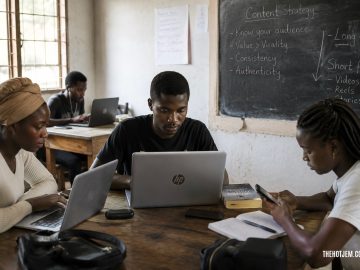




Can Africa Build The Next Silicon Valley?
When people hear “Silicon Valley,” they usually think of technology, billion-dollar companies and some of the biggest innovations in the world. Located in California’s San Francisco Bay Area, Silicon Valley became a global technology powerhouse because entrepreneurs, engineers, investors, universities and companies created an environment where ideas could turn into businesses and businesses could grow into global brands.
That is what makes the question about Africa so interesting. Could the continent build a technology ecosystem powerful enough to compete on the global stage? Africa already has many of the ingredients needed to make that happen, from a young and increasingly connected population to entrepreneurs who are creating technology to solve problems that affect millions of people every day.
Africa is already producing technology companies that are attracting attention beyond their home countries. Fintech has transformed the way many people send, receive and manage money, while digital platforms are changing how people shop, work, learn, access healthcare and run businesses. Mobile money is one of the clearest examples of African innovation because it shows how technology can develop around the realities of a particular market rather than simply copying solutions created somewhere else.
The continent’s large and growing population also creates enormous potential for businesses that can solve everyday problems. A company does not necessarily need to invent something completely new to become successful. Finding a better way for people to pay bills, move around cities, access healthcare, learn new skills, communicate or run a small business can create a valuable product when millions of people face the same problem.
Countries such as Nigeria, Kenya, South Africa, Egypt, Ghana and Rwanda have already developed growing technology and startup communities, although each market has its own strengths and challenges. Lagos has become an important centre for technology and fintech, Nairobi has built a strong reputation for digital innovation, while Cape Town, Johannesburg, Cairo, Accra and Kigali have also attracted entrepreneurs and investors.
The opportunity, however, comes with some very real obstacles. Reliable electricity and affordable internet access remain challenges in parts of the continent, while entrepreneurs can struggle to find enough capital to take a promising business from an idea to a company that can compete internationally. Regulations, infrastructure, access to skilled workers and the cost of doing business can also make it difficult for startups to grow.
Then there is the issue of talent. Many highly educated and skilled Africans leave the continent for opportunities in Europe, North America and other parts of the world. That can create a loss of talent for African economies, but it does not necessarily mean those skills are permanently disconnected from Africa.
Millions of Africans living abroad work in technology, finance, engineering, medicine, education, business and other fields that can contribute to the continent’s growth. Someone living in Canada could mentor developers in Cameroon, while an entrepreneur in London could invest in a technology company in Lagos. A professional in the United States could help an African startup connect with international customers, while someone living in France could build a company that combines a development team in Africa with clients in Europe.
The opportunity is not limited to people moving back home permanently. Africans living overseas can participate through investment, mentorship, partnerships, training, research, business development and international connections. This could create a much stronger link between talent and capital outside Africa and the entrepreneurs building businesses on the continent.
Artificial intelligence could make that connection even more important. There is enormous room for technology that understands African languages, cultures and everyday realities, particularly because many African languages remain poorly represented in mainstream digital products. Businesses developing language technology, translation tools, educational platforms and AI products designed around African users could find opportunities that global companies have overlooked.
Healthcare is another area where technology could have a significant impact. Digital platforms can make it easier for people to access information, communicate with healthcare professionals, manage appointments and keep track of medical records. Technology can also help healthcare providers organize information and reach people who may have limited access to traditional services.
Agriculture presents another major opportunity because millions of people across Africa depend on it. Digital tools can help farmers access weather information, market prices, farming advice and financial services, while technology can also make it easier to connect farmers with buyers. Solving these practical problems could have a much greater impact than simply creating another consumer app.
Education is equally important. Africa has a huge and growing population of young people looking for skills that can help them find jobs, start businesses and compete in a changing economy. Online education, professional training and affordable digital learning platforms can give people access to knowledge that may previously have been available mainly in major cities or outside the continent.
Entertainment should not be overlooked either. African music, film, sports and digital creators already have audiences around the world. Technology is giving African creators more ways to distribute their work, build international audiences and generate income without depending entirely on traditional media companies.
But there is one important distinction: Africa should not try to become another Silicon Valley.
Silicon Valley developed under a very specific combination of economic, educational, financial and historical conditions. Africa has a completely different set of circumstances and challenges. Trying to copy California would miss the opportunity to build something that actually fits the continent.
The bigger opportunity is to create an African technology ecosystem that solves African problems while producing products that can eventually serve people anywhere in the world. A payment system developed to address challenges in African markets could be useful in other emerging economies. Agricultural technology created for African farmers could eventually be adapted for markets in Asia or Latin America, while a transportation solution designed for a crowded African city could potentially work in other rapidly growing cities.
That is where African innovation could become particularly powerful. Instead of simply being consumers of technology developed elsewhere, African countries could increasingly become producers of technology, ideas and companies that are exported around the world.
There are already signs that this is happening, with startup communities, technology hubs, innovation centres and digital businesses developing across the continent. The question now is whether governments, universities, investors, businesses and technology professionals can create the conditions these companies need to grow.
Better internet access, reliable electricity, strong education systems, access to capital and policies that encourage innovation will all matter. So will creating an environment where entrepreneurs can take risks, fail, learn from those failures and try again without being buried by unnecessary barriers.
The African diaspora can play an important role in that process. Someone living in London could invest in a company in Nairobi, while someone in Toronto could mentor developers in Douala. A professional in Paris could help an African business enter the European market, and an entrepreneur in Atlanta could build partnerships that connect an African company with customers in the United States.
Those relationships could eventually create something bigger than individual investments or business deals. They could form a network connecting African talent, capital and ideas with people and markets around the world.
For Africans living abroad, that could also change the way we think about the continent. Africa does not have to be viewed only as the place where our families come from or the place we send money to. It can also be a place to invest, build, collaborate and create something with long-term potential.
The opportunity is particularly interesting for entrepreneurs who understand both sides of that equation. Someone who has lived abroad may bring international experience, professional networks or access to capital, while people living on the continent may have a much deeper understanding of local customers and the problems they face. Bringing those perspectives together can create stronger businesses than either side could build alone.
Africa may eventually develop several major technology centres rather than one Silicon Valley-style location. Lagos, Nairobi, Cape Town, Cairo, Accra, Kigali and other cities can each develop strengths in different industries while remaining connected to one another. The result could be a continent-wide technology network rather than a single city dominating the industry.
The real goal, then, should not be to ask whether Africa can copy Silicon Valley. It should be whether Africa can build a technology ecosystem that is powerful enough to create companies, jobs, wealth and solutions that reach far beyond the continent.
Africa has the entrepreneurs, the talent, the problems that need solving and a massive potential market. What it needs is stronger infrastructure, greater access to capital, continued investment in education and technology, and deeper connections between people building businesses on the continent and those who have taken their skills and experience abroad.
Africa may never become the next Silicon Valley, and perhaps it shouldn’t. The more interesting possibility is that it could build something entirely its own, shaped by the continent’s challenges, creativity and talent, and eventually become one of the world’s most important technology ecosystems.
Discover more from The HotJem
Subscribe to get the latest posts sent to your email.