



How Dangote Turned Nigeria’s Cement Problem Into A Billion-Dollar Business
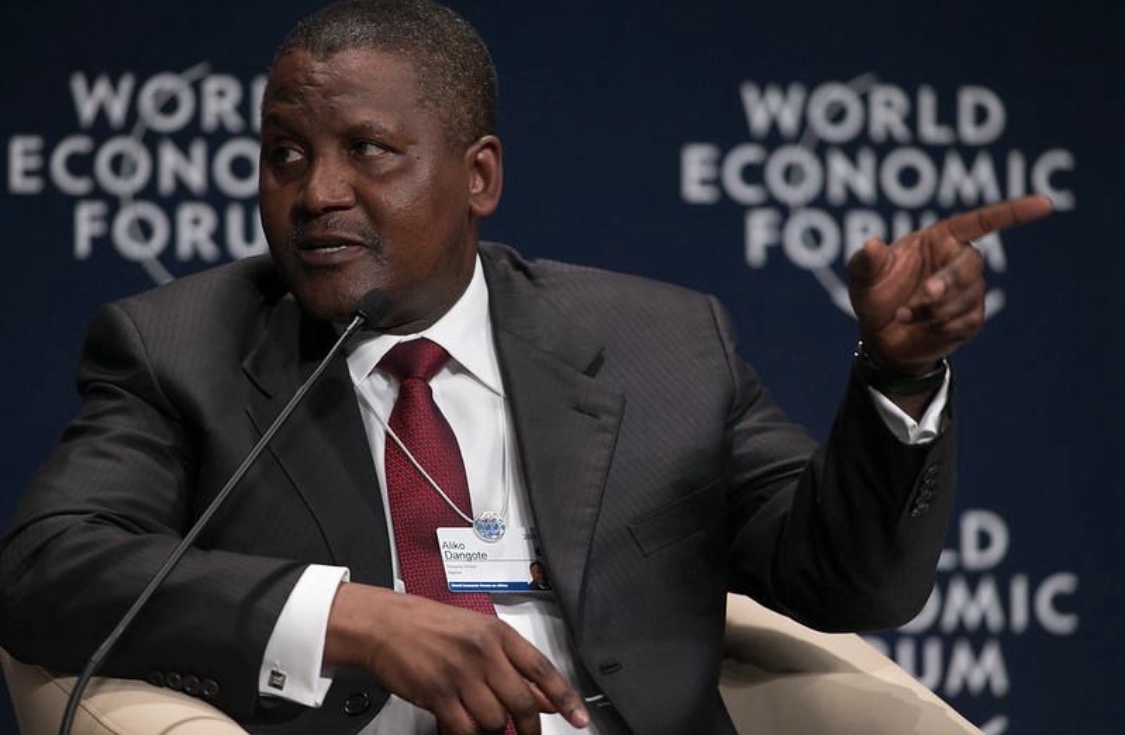
Imagine making good money importing a product, only to have the president of your country call you at 5 a.m. to ask why you aren’t making it yourself. That is essentially how a conversation between former Nigerian President Olusegun Obasanjo and Aliko Dangote helped set the stage for one of Africa’s biggest cement businesses.
Back in 2003, Nigeria was importing large amounts of cement even though the country had the raw materials needed to produce it locally. Dangote was already making money importing and distributing cement, so from a business perspective, he had little reason to change what was working. But Obasanjo wanted to understand why Nigeria was relying on imports for something it could produce at home.
Obasanjo later recalled calling Dangote at around 5 a.m. and asking to meet him that morning. When they finally sat down, he questioned why Dangote was importing cement instead of manufacturing it in Nigeria. Dangote’s answer was straightforward: importing cement was cheaper and more profitable than producing it locally.
Think about that for a moment. Dangote wasn’t necessarily looking at the situation from the perspective of what Nigeria needed. He was looking at the numbers and choosing the option that made the most business sense. If importing brought in more money than manufacturing, why would he invest heavily in factories instead?
Obasanjo wanted to know what the government could do to change that calculation. Dangote’s suggestion was that access to cement imports should be tied to investment in local manufacturing. In other words, if companies wanted to continue importing cement, they should also have an incentive to produce it in Nigeria.
That conversation came at a time when the Nigerian government was trying to reduce dependence on imported cement and encourage local production. Policies supporting what became known as backward integration encouraged companies to invest in manufacturing rather than rely on imports alone. For Dangote, this created an opportunity to do something much bigger than bringing cement into the country and selling it.
Dangote had already started positioning himself for that change. His group acquired the Obajana cement project in Kogi State in 2002, and construction began in 2004. The plant was commissioned in 2007 with an initial production capacity of about five million tonnes a year, giving Dangote a major foothold in Nigeria’s cement manufacturing business.
Building a cement factory is a very different game from importing cement. It takes serious money, equipment, infrastructure, people and time before a business can begin producing at scale. Dangote was no longer simply buying a product from somewhere else and selling it to Nigerian customers. He was investing in the facilities needed to make that product himself, with the potential to supply a much larger market.
And he didn’t stop with Obajana. Over the years, Dangote Cement expanded its manufacturing capacity in Nigeria and moved into other African markets. The company established operations in countries including Cameroon, Senegal, Ethiopia, Zambia, Tanzania, Sierra Leone and the Republic of Congo, among others. What started as a response to Nigeria’s dependence on imported cement grew into a business serving construction markets across the continent.
That expansion is a big part of what makes the story interesting. Cement might not sound like the most exciting business in the world, but think about how much of it is needed to build homes, offices, roads and other infrastructure. As cities grow and people build more, the demand for construction materials creates a huge market. A company that can produce cement efficiently and deliver it to customers has the chance to build a very valuable business.
There is also a lesson here for anyone thinking about starting a business in Africa. Sometimes the opportunity isn’t in selling something that people already buy. It is in asking whether you can produce it locally, make it more accessible or find a better way to serve the market. Dangote saw that cement was already in demand. The bigger opportunity was not simply selling more bags of cement, but building the capacity to produce it on a much larger scale.
That doesn’t mean manufacturing is easy or that every importer should rush out and build a factory. Local production requires capital, reliable operations, access to raw materials, transportation and enough customers to make the investment worthwhile. Dangote’s move worked within a particular market and policy environment, and it took years of investment and expansion to build the business into what it is today.
For Africans living abroad, the story is worth paying attention to for another reason. Many people in the diaspora think about investing back home, starting a business or finding opportunities in growing African markets, but they often focus on familiar ideas such as real estate, restaurants or retail shops. Manufacturing may require far more capital and expertise, but it also shows how solving a basic need can become the foundation of a much larger company.
There are opportunities around major industries, too. A cement manufacturer needs transportation, equipment, maintenance, packaging, distribution and other services to keep its operations running. That means a growing industry can create room for businesses beyond the company producing the actual product. Not everyone needs to own a cement factory to benefit from the demand surrounding construction.
The 5 a.m. phone call did not build Dangote’s factories or guarantee his success. He still had to make the investment, take the risks and grow the business over many years. But the conversation highlighted a decision that helped change the direction of his cement operations: instead of relying primarily on imported cement, he would invest in producing it locally and eventually expand beyond Nigeria.
And perhaps that is the most useful takeaway from this story. A business that looks profitable today might have an even bigger opportunity hiding behind it. Sometimes the question is not how to sell more of what everyone is already buying, but whether there is a way to make it yourself, serve the market better and build something that can grow beyond your original customers.
Discover more from The HotJem
Subscribe to get the latest posts sent to your email.