



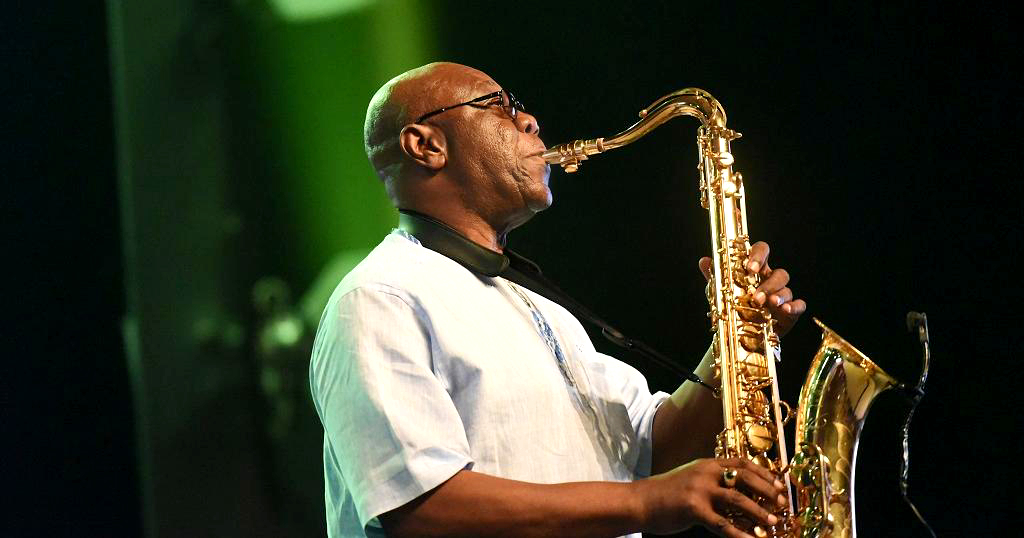
Adieu Ma-ma-se, Ma-ma-sa, Ma-ma-ko-sa
|
Getting your Trinity Audio player ready...
|
I am surfing the internet, searching for the original video of “Soul Makossa” and there is none. I am observing social distancing at my apartment complex in Texas, to prevent catching the coronavirus.
I am also following the news online as the death figures skyrocket worldwide, when I learned that the legendary Cameroonian saxophonist, Manu Dibango is also gone. Cause of death: COVID-19. Manu Dibango has become the first superstar musician to die from coronavirus. The reality of the statistics I see online sinks and settles in hard. This is not just a disease of rising numbers. This is a disease that can affect anybody and everybody you know.
The earliest Youtube video of Manu performing “Soul Makossa” at a concert that I find is in 1983, ten years after he released the song. He’s wearing a long, white Agbada and reading glasses. He picks up xylophone sticks and starts playing a xylophone. The crowd claps and cheers. He then abandons the xylophone sticks, picks up his saxophone and introduces a female dancer as the band whips up the beat. As she gyrates around the stage, Manu booms on the microphone in his hoarse voice.
“Ma-ma-se. ma-ma-sa, ma-ma-ko-sa.”
The crowd reacts in frenzy at the wildly popular refrain that has now shaped world music. But the adulation is not enough for Manu. He kisses his saxophone and starts soloing beautiful notes on the funk beat with the most powerful of the woodwinds. The crowd rocks to his groovy tune, beautified by backup vocals in the Douala language. It is a song that has now become the stuff of legend.
Manu released “Soul Makossa” a decade earlier and it became the first song by an African artist to make it into the US Billboard Hot 100 chart peaking at number 23 in 1973. At the time, a young Michael Jackson was working on what would become the best-selling album of all time, Thriller.
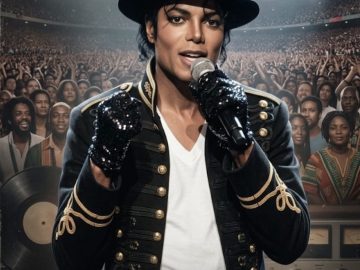
But Michael was more than just inspired by the funky rhythms of “Soul Makossa”, which was so popular it was played at parties in America and had become a favorite among radio DJs in New York, who played it on heavy rotation. Michael Jackson decided to poach the song for his hit, “Wanna be startin somethin.” A legal case ensued against Michael and both artists settled out of court. But the sampling of “Soul Makossa” did not end there.
By the point of Manu Dibango’s death, the song had been sampled by 48 artists worldwide, including Rihanna, Jay-Z, The Fugees, Black Eyed Peas, Will Smith, Kanye West, Childish Gambino, Jennifer Lopez and many others.
Manu also served the menu which led to the emergence and global consumption of the Makossa genre from Cameroon.
Charles Lembe, Moni Bilé, Ekambi Brillant, Bébé Manga, Ben Decca, Dina Bell, les Black Styl – the music group which produced Makossa’s first arranger, Toto Guillaume were among the next generation of artists who kept the Makossa wheel spinning in slightly different directions from Manu’s Makossa sound. But his legacy remained intact.
Manu’s music was the soundtrack of my childhood and adolescence. His eclectic saxophone notes and hoarse voice rippled through as soundtrack to almost every program on Cameroonian state television, CRTV and numerous radio stations around Africa.
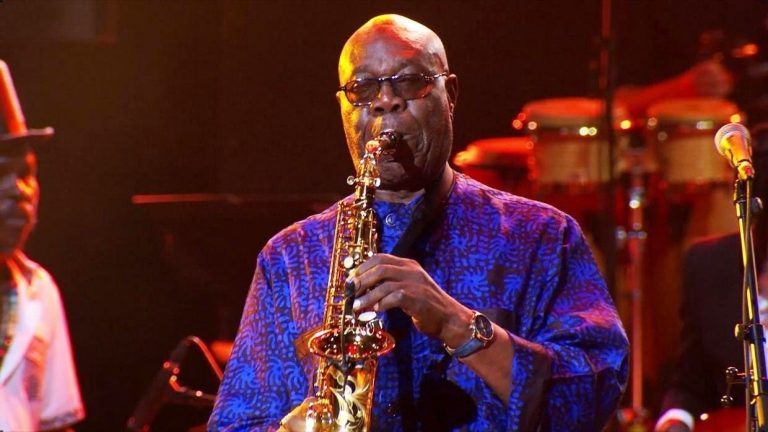
That also includes the BBC evening radio program, “Network Africa,” together with his composition for film and television.
Manu’s infectious smile and simple style adorn so many a poster on the streets and snack bars of Douala, Yaoundé and other Cameroonian towns; a krobo head that glitters like the moon, coupled with that smile.
When he is not smiling, it is his lips which are perennially kissing a saxophone beneath a pair of dark sunglasses, as he dons different shirt sized multi-color boubou’s and a pair of trousers.
As much as Manu is revered as the father of Makossa in Cameroon and one of Africa’s greatest saxophonists, it is his experimentation both in and out of music that is startling. He was also a philanthropist, singer, composer, pianist, vibraphonist and xylophonist, whose innovative jazz, rap, gospel, electro and funk fusions and expansive collaborative work played a significant role in introducing European and North American audiences to the traditional and contemporary sounds of West Africa.
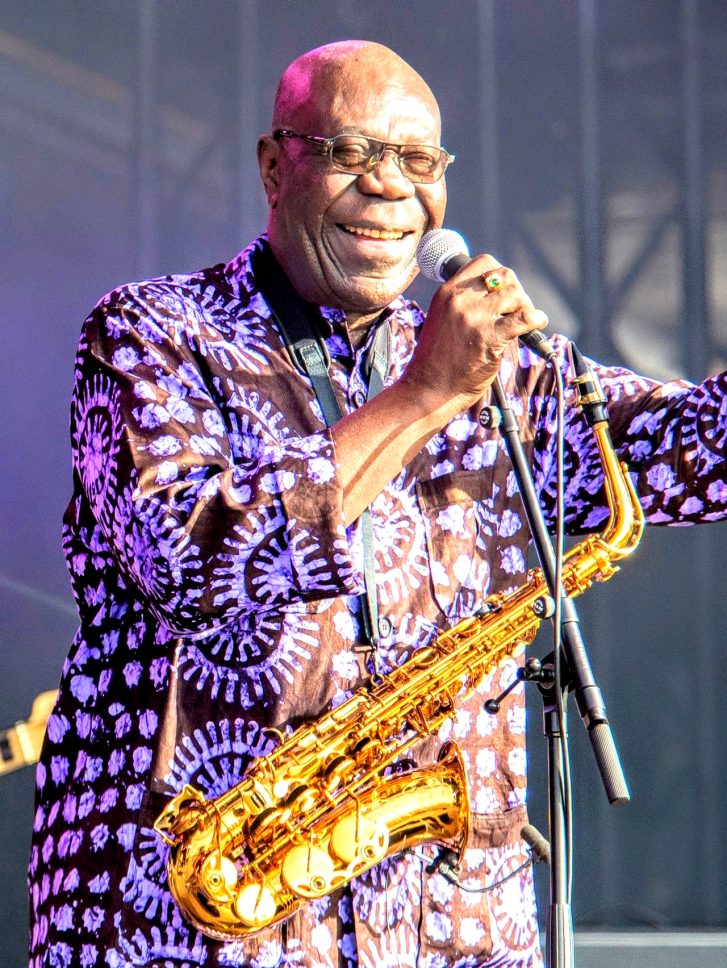
He released over seventy albums and collaborations. His 1994 album “Wakafrika” brought together the African music heavyweights, Youssou N’Dour, King Sunny Ade, Salif Keita, Angelique Kidjo, Papa Wemba, Ray Lema and the accapella group, Ladysmith Black Mambazo. He often used such musical and personal influence to garner support for humanitarian causes and he was named UNESCO peace artist of the year in 2004.
Manu’s 1995 album “Lamastabastani” is a return to his spiritual roots with a mixture of gospel music and blues. He is quoted as saying, “I’m a child raised in the Hallelujah!”
Emmanuel Dibango N’Djocke was born in Douala in 1933 to a musical Protestant family. His mother was Douala and his father, Yabassi. He sang in a local church where his mother was a choir leader and was quickly noticed for his precocious music talents. In 1949, he was sent to study in France.
To the disappointment of his father, who wanted him to become a medical doctor or lawyer, Manu failed his high school exams and took up music, performing in nightclubs in Belgium instead. It was evident that Manu was always interested in breaking boundaries.
His gamble paid off and he became Makossa’s global pioneer. However, since Manu considered himself a musician first and not just an African musician, he broke boundaries even further with his wide repertoire and musical experimentation with numerous genres and artists. It is sadly ironic that he has again broken boundaries again by becoming the first music superstar to die of COVID-19.
In a short message published on social networks, the family of the music legend announced.
It is with deep sadness that we announce the death of Manu Dibango, our Grandpa Groove, on March 24, 2020 at the age of 86, from the consequences of COVID-19.”
Adieu Grandpa Groove. Adieu “Ma-ma-se, ma-ma-sa, ma-ma-ko-sa.”
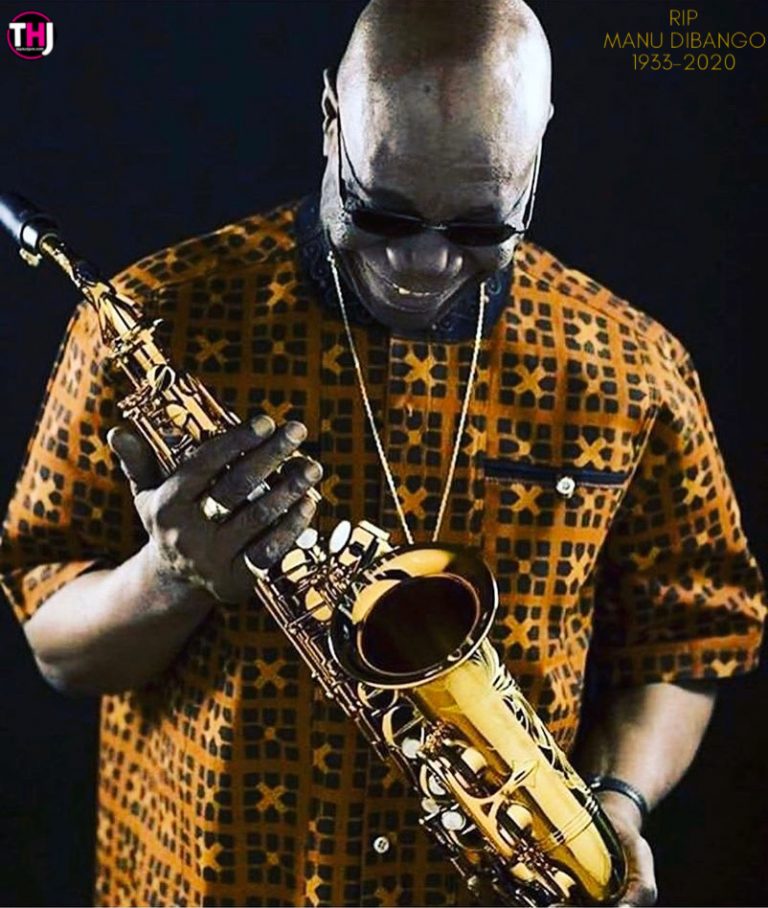
RIP MANU DIBANGO, 1933 – 2020
About The Author:
Nkiacha Atemnkeng is a Cameroonian writer and music journalist. His work has been published in The Africa Report, Culture Trip, Bakwa, Saraba and Gyara Magazine. He is a Goethe Institut/Sylt Foundation writing residency fellow. Find him on Twitter: @nkiacha
Discover more from The HotJem
Subscribe to get the latest posts sent to your email.