



Can AI Truly Capture The Soul Of African Music?
Artificial Intelligence is slowly entering African music, and honestly, the conversation around it is becoming impossible to ignore. Some people believe AI could help artists create faster, experiment more, and reach larger audiences. Others think it could slowly damage the originality and emotional depth that make African music feel special in the first place.
What makes this conversation deeper is that African music has never only been about production or catchy beats. A lot of African music comes from real life experiences, culture, struggle, celebration, spirituality, heartbreak, family, language, and community life. Whether it is Afrobeats, Amapiano, Makossa, Highlife, Bongo Flava, or Afro Soul, the music often carries the feeling of where people come from and what they have lived through.
That is why many people are now asking a serious question. Can AI actually capture the soul of African music or can it only imitate the sound?
The scary part is that AI is becoming very good at replication. It can already recreate Afrobeats drum patterns, generate Amapiano style production, imitate vocal styles, and blend different African sounds together within seconds. Some AI generated songs even sound polished enough to go viral on TikTok or streaming platforms.
But sounding good and feeling real are two different things.
When artists like Burna Boy, Wizkid, Fally Ipupa, or Angelique Kidjo make music, fans are connecting to more than just sound quality. People connect to personality, storytelling, emotions, confidence, pain, culture, and lived experiences. AI may eventually master the technical side of music, but it still cannot truly experience heartbreak, ambition, spirituality, joy, struggle, or human connection the way real artists do.
At the same time, many people do not believe AI should automatically be treated like the enemy either. Every generation of music has evolved through technology in some way. Auto Tune, streaming, digital production software, and even drum machines completely changed music over the years. AI may simply become the next tool artists use inside studios to experiment and push creativity further.
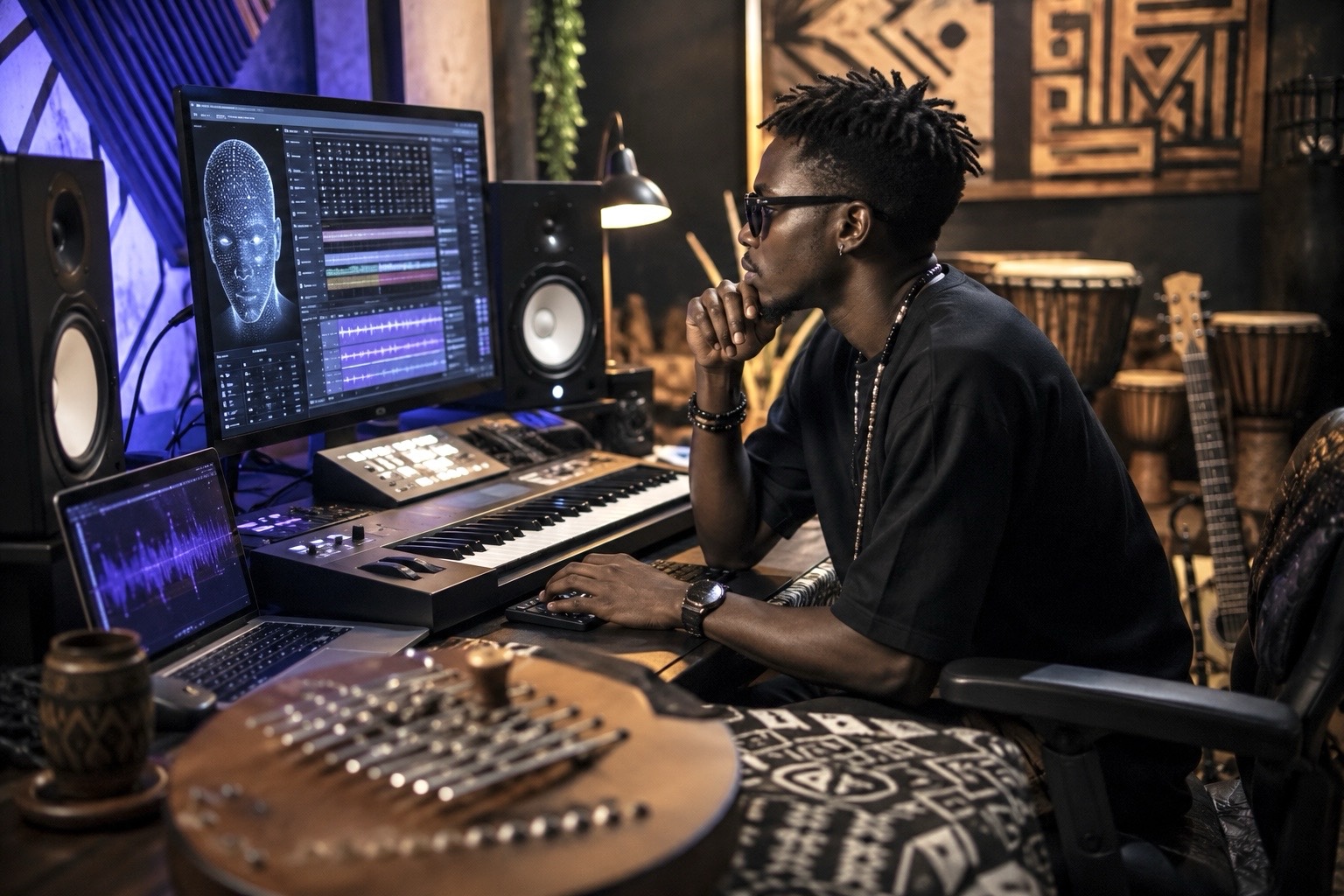
Some African artists and producers are already using AI for songwriting ideas, vocal effects, beat creation, mixing assistance, and production planning. In that situation, AI is not replacing the artist. It is acting more like a creative assistant.
Still, there are real concerns, especially for upcoming artists trying to build careers online. One of the biggest dangers is speed and volume. AI can generate hundreds of songs quickly while human artists may spend weeks or months carefully building one project. Platforms like TikTok, YouTube Shorts, and Spotify already reward fast trends and nonstop content. AI fits perfectly into that world.
There is also growing fear around imitation. AI is becoming better at copying flows, accents, vocal textures, and production styles. An artist can spend years building a unique sound only for AI tools to recreate something extremely similar almost instantly. That is why conversations around voice cloning, ownership, and copyright are becoming more intense across the music industry.
For now, bigger artists may still have an advantage because fans are attached to more than just music files. People follow artists because of their personality, performances, interviews, fashion, lifestyle, and cultural influence. A machine may imitate a voice, but it still cannot fully replace human presence.
Ironically, AI may actually make authenticity MORE valuable in the future. As more machine generated music floods social media, audiences may start appreciating real storytelling, imperfections, originality, and emotional depth even more than before.
Live performances will probably become even more important too. AI cannot recreate the feeling of thousands of people singing together at a concert or the emotional energy fans feel standing in front of a real artist on stage.
Right now, AI music mostly creates fast viral moments instead of timeless musical legacies. Many AI songs trend online for a few days before disappearing just as quickly. They often lack identity, emotional depth, and long term cultural impact.
That is why the future of African music may ultimately depend on balance. Technology will continue shaping sound, but human experiences will still shape meaning. AI can help artists move faster and experiment creatively, but many people still believe the emotional soul behind African music must remain human.
The real question is no longer whether AI can create African music because it already can. The bigger question is whether artists will use AI as a tool that supports creativity or allow it to slowly replace the human spirit that gives the music meaning in the first place.
Discover more from The HotJem
Subscribe to get the latest posts sent to your email.