



Why Hotel Rwanda Remains One Of Africa’s Most Powerful Films
More than two decades after its release, Hotel Rwanda remains one of the most powerful films ever connected to Africa. While many movies fade from public conversation over time, this one continues to spark discussions about genocide, courage, leadership, and one of the darkest chapters in modern African history.
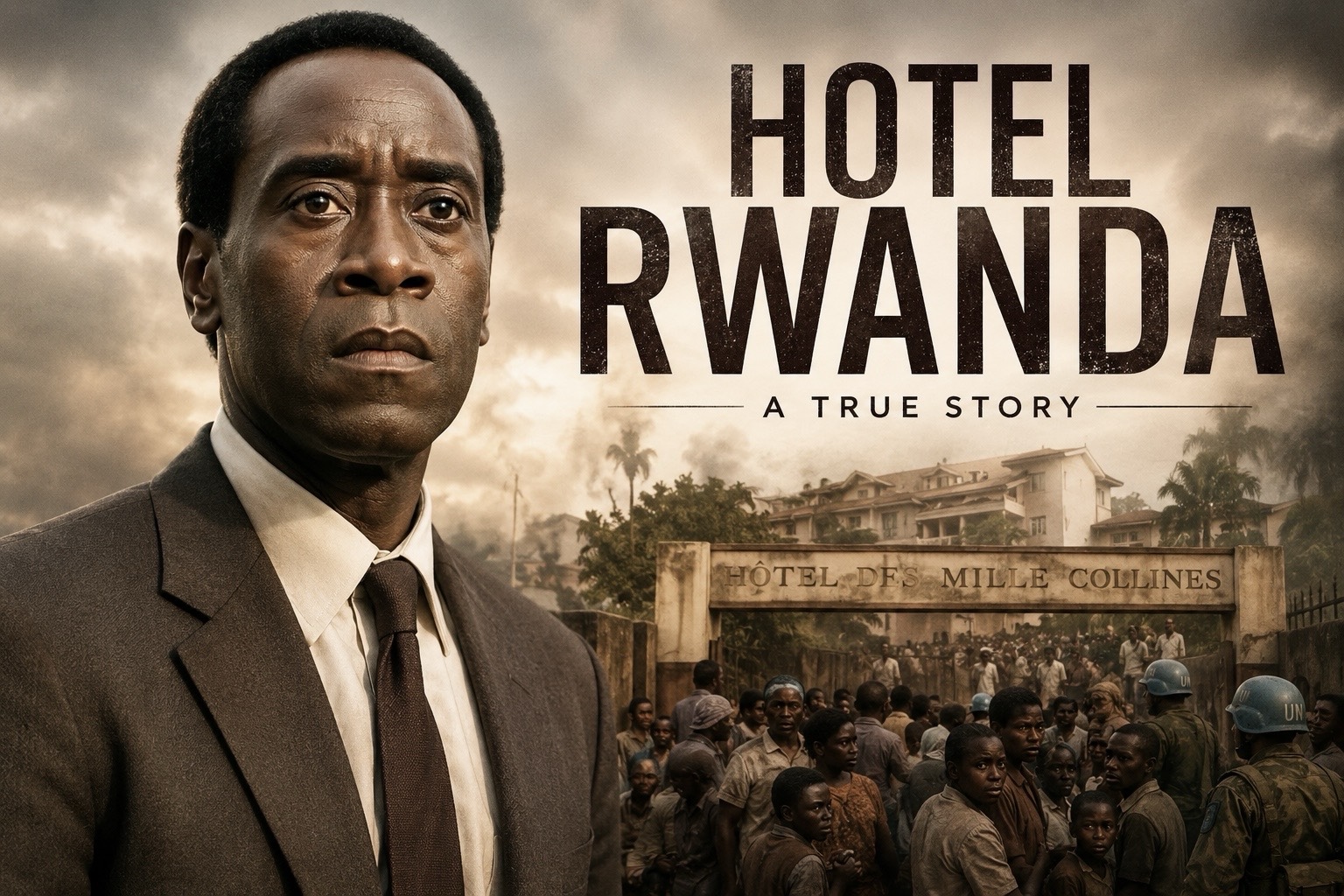
Released in 2004, the film is based on the events of the 1994 Rwandan genocide and tells the story of Paul Rusesabagina, a hotel manager who sheltered hundreds of people inside the Hôtel des Mille Collines as violence swept across the country. What began as an ordinary life quickly turned into a fight for survival as ethnic tensions exploded into one of the worst humanitarian tragedies the world has witnessed.
What makes Hotel Rwanda so memorable is that it focuses less on politics and more on people. Viewers experience the fear, uncertainty, and heartbreak through the eyes of families trying to stay alive while the world seems unwilling to help. Mothers desperately protect their children. Husbands search for loved ones. Friends become separated. Neighbors turn against one another. The film forces viewers to imagine what they would do in similar circumstances.
For many people outside Africa, Hotel Rwanda served as their first introduction to the Rwandan genocide. The movie brought global attention to a tragedy that claimed hundreds of thousands of lives within a short period and raised uncomfortable questions about why international intervention came so late. It remains a painful reminder that while foreign governments moved quickly to protect their own citizens, many Rwandans were left to face unimaginable danger with little support.
At the center of the story is Paul Rusesabagina, portrayed by Don Cheadle. He was not a soldier, politician, or military leader. He was a hotel manager who used negotiation, relationships, and remarkable composure to protect those seeking refuge inside the hotel. His actions transformed him into a symbol of courage and resilience during one of Africa’s most devastating crises.
The hotel itself becomes a powerful symbol throughout the film. Outside its walls, chaos and violence consume the country. Inside, frightened families cling to hope while waiting for help that may never arrive. The building becomes more than a hotel. It becomes a temporary sanctuary where humanity survives despite overwhelming fear.
The film also explores how dangerous division and propaganda can become when left unchecked. Years of tension, political manipulation, and hate-filled messaging helped create an environment where violence spread rapidly. Although the story is rooted in Rwanda’s history, the lessons remain relevant today in many parts of the world where division and misinformation continue to fuel conflict.
Part of the reason Hotel Rwanda still resonates is because it feels deeply human. The movie is not driven by action sequences or special effects. Instead, it relies on emotion, tension, and the difficult choices ordinary people must make when faced with extraordinary circumstances. Viewers connect with the story because they can imagine themselves protecting their families, helping strangers, or simply trying to survive.
Beyond cinema, the film became part of Africa’s collective memory. It helped introduce African stories to wider audiences while proving that African history deserves serious attention and thoughtful storytelling. It also challenged viewers to confront uncomfortable truths about how the world responds to suffering when it happens on the continent.
Even today, the themes explored in Hotel Rwanda remain relevant. War, displacement, political violence, ethnic division, and humanitarian crises continue to affect communities around the world. The film serves as both a historical reminder and a warning about what can happen when hatred is allowed to grow unchecked.
More than twenty years later, Hotel Rwanda remains one of the most emotionally impactful films connected to Africa because it captures something deeper than tragedy. It captures human courage during fear, hope during hopelessness, and the determination to protect life when everything else is falling apart.
Discover more from The HotJem
Subscribe to get the latest posts sent to your email.