


The Version Of “Abroad” Africans Don’t Post Online
For many Africans, moving abroad has always been sold as the ultimate success story. The moment someone relocates to the United States, Canada, the UK, or Europe, people back home immediately assume life is soft. The streets are cleaner, the systems work, the currency is stronger, and social media makes everything look perfect. You see the airport photos, the winter outfits, the aesthetic apartments, the brunch spots, the “soft life” content. From the outside, it looks like the dream worked exactly the way people imagined it would.
What rarely gets posted is the reality behind all of that.
Living abroad can be deeply lonely in ways many Africans are not emotionally prepared for. Back home, life feels communal without people even realizing it. There is always noise, movement, random conversations, family dropping by, neighbors greeting each other, someone checking on you without invitation. Abroad can feel completely different. People stay in their own lane. You can live in the same building with someone for two years and barely know their name. For many Africans, especially in the beginning, the silence can feel heavy.
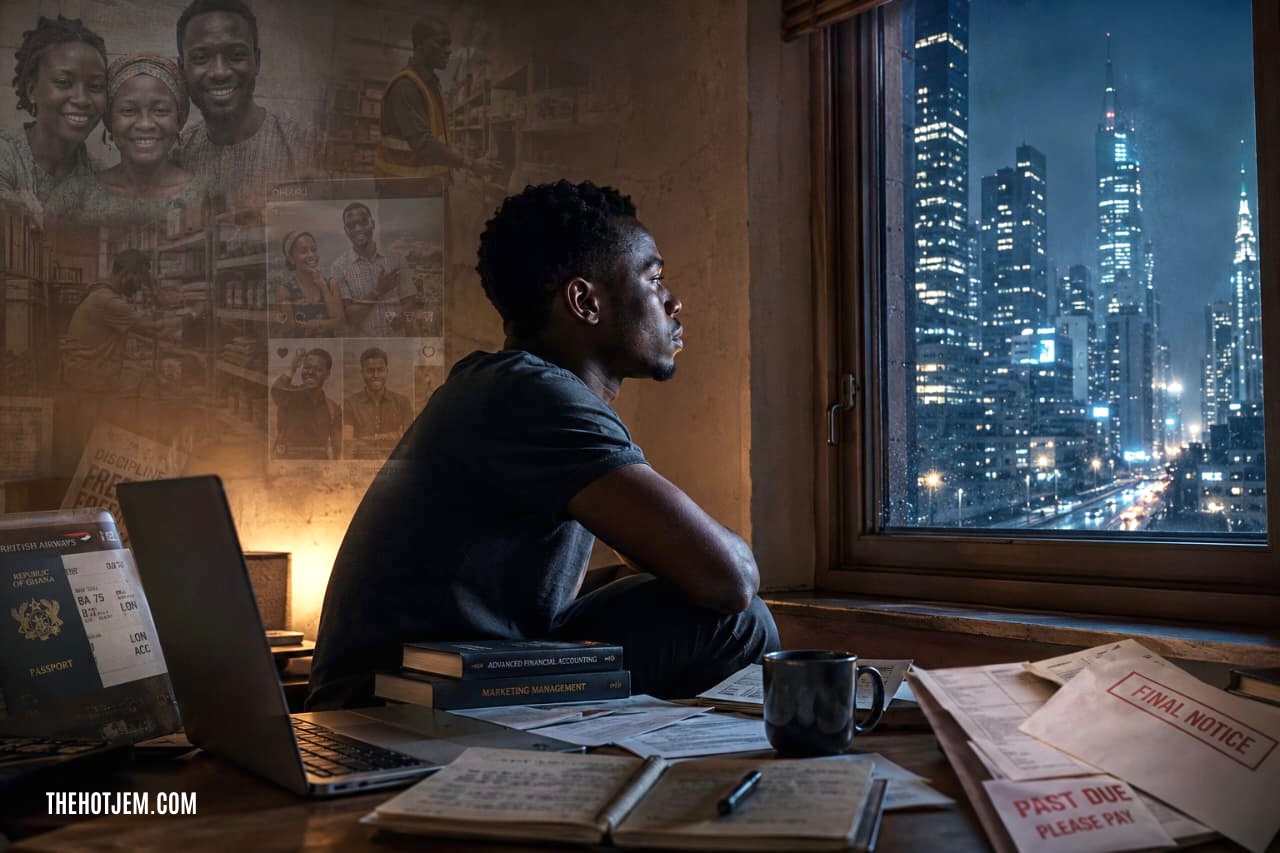
Then there’s the financial reality nobody really explains properly. Yes, people earn in dollars, pounds, or euros, but the cost of survival is also extremely high. Rent alone can humble you quickly. Add transportation, insurance, groceries, bills, taxes, and suddenly that “big foreign salary” starts disappearing very fast. At the same time, many Africans abroad carry another pressure people rarely discuss openly: the responsibility of taking care of people back home. Sometimes you are trying to survive and still expected to send money regularly because everyone assumes life abroad automatically means financial stability.
One of the strangest parts of living abroad is how it can affect your identity. In your new country, you may constantly feel like you are different. Your accent, your background, your culture, even your name can make you stand out. But then you go back home and people start saying you’ve changed. Suddenly you feel too foreign for home and too foreign for abroad at the same time. A lot of Africans in the diaspora quietly carry that feeling without fully knowing how to explain it.
Career struggles are another reality many people hide. Some Africans move abroad highly educated and respected in their fields, only to discover that their qualifications are not fully recognized. Others have years of experience back home but still struggle to access the same opportunities abroad. For some people, relocating means rebuilding their entire professional identity from scratch. That adjustment can affect confidence more than people realize.
There is also the emotional pressure to constantly look like you are doing well. Social media has made this even worse. A lot of people abroad feel uncomfortable showing struggle because they do not want family or friends back home to worry, judge them, or see them as failures. So instead, people post the polished version. Nice outfits. Vacation photos. New car. Cute apartment. Meanwhile, behind the scenes, they may be exhausted, stressed, overwhelmed, or unsure about what comes next.
At the same time, many Africans abroad will also tell you the experience changes them in powerful ways. It forces growth, independence, adaptability, and resilience. Some eventually build beautiful lives and opportunities for themselves over time. But the journey is often far more emotionally complex than the glamorous version people see online.
And honestly, that may be the biggest hidden truth of all. Living abroad is not automatically a success story or a failure story. For many Africans, it’s both at the same time.
Discover more from The HotJem
Subscribe to get the latest posts sent to your email.