

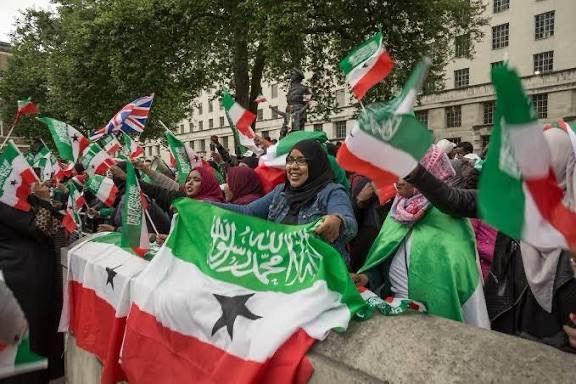
Africa’s 55th State?
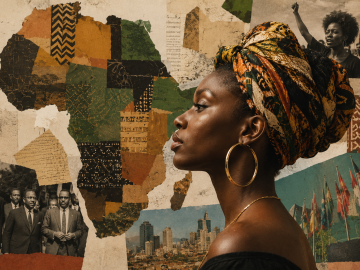
For many Africans on the continent and in the diaspora, conversations about borders and independence are deeply personal. They touch on history, identity, and how Africa moves forward in a global system that has often excluded African voices. That is why Israel’s decision to recognise Somaliland as an independent country has sparked strong reactions across Africa and beyond. The move has reopened old debates about who gets to decide statehood, how African borders are treated, and what this could mean for the future of the continent.
On December 26, 2025, Israel officially recognised the Republic of Somaliland as an independent state. This was the first time any country has done so since Somaliland declared independence from Somalia in 1991. Located in the Horn of Africa, Somaliland has spent more than thirty years operating with its own government, security forces, and public institutions. Despite this, it has remained largely unrecognised internationally and is still officially considered part of Somalia by most of the world.
For Somaliland, this moment is seen as historic. Since 1991, the region has argued that it meets the basic requirements of a state. It has its own elected government, its own security forces, its own currency, and functioning public institutions. Unlike many conflict zones in the region, Somaliland has remained relatively stable for years. Supporters of Somaliland’s independence believe Israel’s recognition validates decades of effort to gain international legitimacy after years of diplomatic isolation.
However, this development has triggered strong opposition from Somalia and many international organizations. Somalia’s federal government strongly condemned Israel’s decision, calling it an unlawful act and a violation of Somalia’s sovereignty and territorial integrity. Somali leaders insist that Somaliland remains part of Somalia under international law and have vowed to challenge the recognition through diplomatic and legal means. They see the move as a direct threat to the unity of the Somali state.
The African Union and several African countries have also rejected Israel’s decision. Many African leaders fear that recognising Somaliland could encourage other separatist movements across the continent. They argue that Africa’s stability depends on respecting existing borders, even when internal political disputes exist. For this reason, the African Union continues to support Somalia’s territorial integrity and has not changed its official position on Somaliland.
Beyond Africa, regional and international bodies have also voiced concern. The Arab League, the Gulf Cooperation Council, and the Organization of Islamic Cooperation have condemned Israel’s recognition, saying it undermines international law and regional stability. Countries such as Egypt, Nigeria, Turkey, Qatar, Saudi Arabia, Iran, and Pakistan have issued statements rejecting the move and reaffirming their support for Somalia as a single unified state. The issue has even reached the United Nations Security Council, where discussions are ongoing about the broader diplomatic and security implications.
One point that has caused confusion among many people is the phrase “Africa’s 55th country.” When people use this expression, they are not saying that Somalia has just become part of Africa. Somalia has always been an African country and remains one today. What they mean is that Africa currently has 54 internationally recognised countries, and if Somaliland were to gain widespread recognition from many countries, the African Union, and the United Nations, it would be counted separately from Somalia. In that case, Africa would move from 54 to 55 countries. This change has not happened yet because recognition by one country alone does not automatically create a new state under international law.
Critics of Israel’s decision warn that recognising a breakaway region could destabilise the Horn of Africa and set a precedent that may encourage other regions to seek separation through political pressure rather than dialogue. They worry this could weaken already fragile states and increase regional tensions. Supporters of Somaliland respond by pointing out that Somaliland has governed itself peacefully for decades and argue that stability and effective governance should matter as much as historical borders.
In the end, Israel’s recognition of Somaliland is a major diplomatic moment, but it does not immediately change Africa’s official political map. Somaliland remains unrecognised by most of the world, and Somalia is still internationally acknowledged as a single country. What this decision has done is reopen a long running debate about statehood, sovereignty, and how the international community decides when a region becomes a country.
Share this
- Click to share on Facebook (Opens in new window)
- Click to share on WhatsApp (Opens in new window)
- Click to share on Twitter (Opens in new window)
- Click to share on Threads (Opens in new window)
- Click to share on LinkedIn (Opens in new window)
- Click to share on Pinterest (Opens in new window)
- Click to email a link to a friend (Opens in new window)
Discover more from The HotJem
Subscribe to get the latest posts sent to your email.