
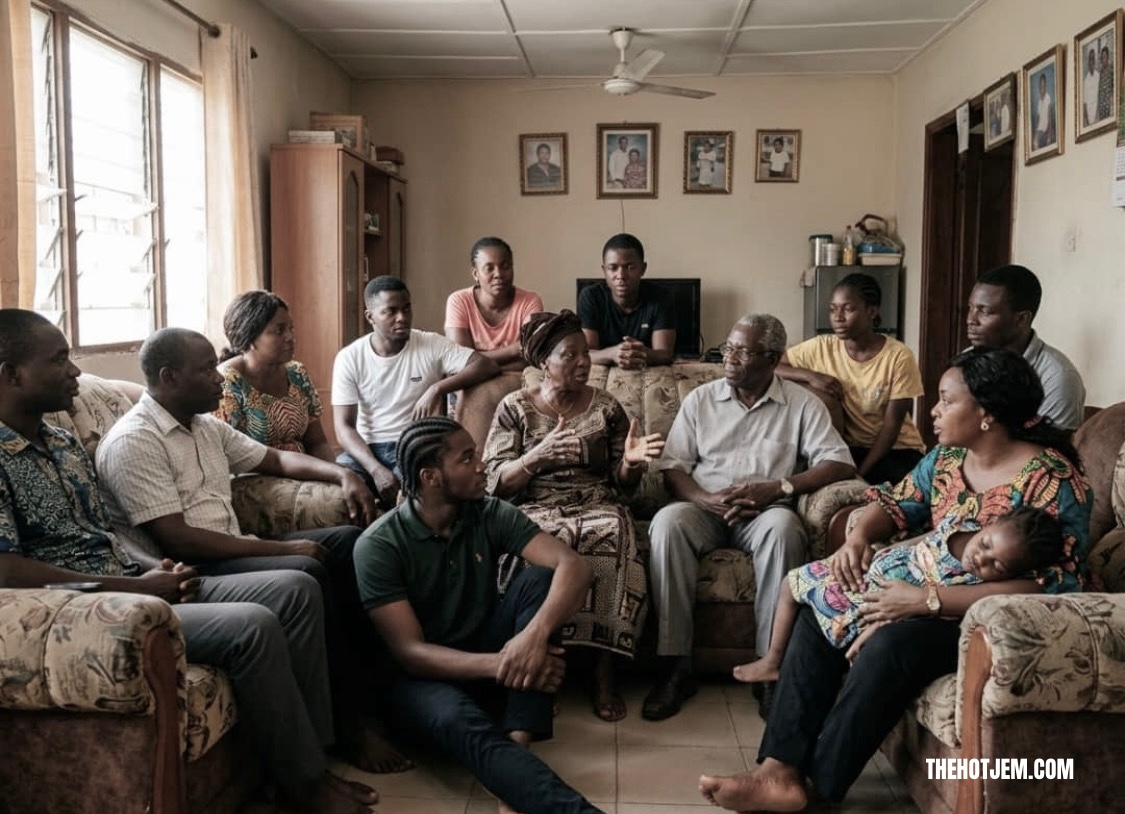
Why Family Obligations Extend Beyond Parents and Children in Africa
In many African families, your responsibilities don’t end with your parents, your partner or your children. You may also be expected to help an aunt, an uncle, a cousin, a grandparent or another relative who needs support. Sometimes, that help means paying school fees, providing a place to stay, contributing towards hospital bills or sending money when someone is going through a difficult time. For many families, this is simply part of being family. When one person is struggling, others are expected to help if they can.
Growing up, many Africans learn that family is much bigger than the people living under the same roof. Your cousins may feel more like siblings, your aunt may help raise you, and your grandparents may play a major role in your upbringing. In Cameroon, for example, a young person who moves to Yaoundé for school or work might stay with an aunt or uncle instead of renting a place of their own. The relative provides accommodation, while the young person gets a chance to study, work or settle into a new environment without carrying all the expenses alone. These arrangements can make life easier, especially when money is tight.
This kind of support works both ways. An aunt who helped pay your school fees may need your assistance years later. A cousin who gave you a place to stay when you were younger might call when they lose their job. Grandparents who helped raise their grandchildren may eventually depend on those same children for food, medical bills and everyday needs. In many families, helping one another is not seen as a favour that needs to be repaid immediately. It is part of the understanding that family members should be there for each other when they can.
Uncles and aunts can also play a major role in a young person’s future. An uncle might help a nephew find a job, teach them a trade or introduce them to people who can open doors. An aunt living in another town might provide a room for a niece attending university. Cousins may share information about job openings, help each other start businesses or contribute money when someone needs urgent assistance. These relationships can give people opportunities they might not have had otherwise, particularly when they are starting out and have limited resources.
But there is another side to this arrangement. Helping family can become difficult when the requests keep coming, especially when the same person is expected to provide most of the support. Imagine a young man in Cameroon earning 100,000 FCFA a month. He has to pay rent, buy food, cover transport and save whatever he can. His younger brother needs school fees, his grandmother needs money for medication, and an aunt has asked for help with a household expense. Each request may be reasonable on its own, but together they can leave him with very little for himself. If he helps everyone, his own plans may suffer. If he says he cannot afford it, some relatives may accuse him of forgetting where he came from now that he has a job.
The pressure can be even greater for the person in the family who earns the most. Once relatives know you have a steady job or a decent income, they may begin to see you as the person to call whenever there is a problem. School fees, hospital bills, rent, business ideas and emergencies can all become your responsibility, even when other relatives could contribute. You may be trying to save for a house, pay off debt or build your own business, but those plans keep getting pushed aside because someone needs help. Before long, you may feel as though you are working not just for yourself and your household, but for everyone who knows you have money coming in.
These expectations can affect personal decisions, too. Some young adults delay moving out, getting married or having children because they already have relatives depending on them. Others struggle to return to school or invest in a business because their income goes towards family expenses. Even spending money on a holiday or buying something for themselves can bring feelings of guilt. They may love their relatives and genuinely want to help, yet feel exhausted by the pressure of always being the one people turn to.
For Africans living abroad, the responsibility often continues across borders. Someone living in France, Germany, the United States, Canada or the United Kingdom may regularly send money home to help parents, pay school fees for younger relatives or cover medical expenses. In some families, that support extends to cousins, aunts, uncles and other relatives as well. The money can make a real difference, helping children stay in school, giving relatives access to medical care or allowing someone to start a small business.
The difficulty is that living abroad does not automatically mean having plenty of money. Rent, taxes, transport, childcare, insurance and other bills can take up a large part of someone’s income. A person may be working long hours and still have debts or very little left after paying their expenses. Yet relatives back home may see pictures of a nice apartment, a new outfit or a holiday and assume that money is readily available. They may not realise that the person they are asking for help is also trying to save, pay bills and build a stable life.
For some migrants, the pressure to provide is one of the biggest parts of living abroad. They may have left home hoping to improve their circumstances, but they also feel responsible for helping the relatives they left behind. Success can become measured by how much money they send home, what they pay for and how many family problems they can solve. Someone who cannot send money when asked may feel guilty, even if they have a good reason. Over time, this can make it difficult to enjoy the life they have worked hard to build.
None of this means that helping relatives is wrong. Extended family support can be one of the most valuable parts of African family life. Children can continue their education when their parents struggle financially, young adults can find accommodation while looking for work, and older relatives can receive care from people who know and love them. Families can also share the costs of emergencies that would be difficult for one household to manage alone. When people contribute according to their abilities, everyone benefits from having others to lean on.
Problems arise when support becomes a one-way arrangement. One relative may be paying school fees, covering medical bills and responding to every emergency while others make little effort to contribute. Sometimes, the person providing help is afraid to say no because they do not want to be called selfish or accused of abandoning their family. But expecting one person to carry the burden indefinitely is not fair, particularly when that person has their own children, bills and future to consider.
Families can handle these responsibilities better by being honest about what is needed and what everyone can afford. When several relatives earn an income, they can agree to share important expenses rather than leaving everything to the person who earns the most. Someone who cannot contribute much money may still be able to help with childcare, errands or caring for an older relative. Families can also agree on priorities when several requests come in at once. A medical emergency or essential school fees may need immediate attention, while other expenses can wait.
It is also okay to set limits. You can love your family and still say that you cannot afford to send money this month. You can help with an urgent expense without agreeing to cover every bill that follows. Saving for your own home, investing in your future and providing for your children are responsibilities worth taking seriously, too. Helping relatives should not mean putting yourself in debt or giving away money you need for basic expenses.
African families do not have to abandon their traditions of unity and mutual support to make these changes. The goal is to make sure that helping one another remains something people can manage, rather than a burden that falls on the same few shoulders. Family members should be able to ask for help without assuming that someone else must always provide it, and those who give should be able to explain their limits without being made to feel ashamed.
At the end of the day, family responsibility in Africa often reaches far beyond parents and children. Aunts, uncles, cousins and grandparents can all play important roles in raising children, creating opportunities and helping relatives through difficult times. That bond is worth preserving, but it works best when support goes both ways and everyone understands that the person helping others has a life and responsibilities of their own. Being there for family matters, but so does making sure that no one person is expected to carry everyone else.
Discover more from The HotJem
Subscribe to get the latest posts sent to your email.