


The Stories Overshadowing The World Cup Before Kickoff
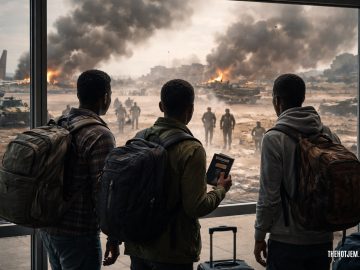
The 2026 FIFA World Cup is supposed to begin with fans around the world focused on the action on the pitch. Instead, many of the biggest headlines during the final days before kickoff have come away from the stadiums. Visa disputes, airport interrogations, security controversies, and travel restrictions have created an atmosphere of uncertainty around what should be a celebration of the world’s most popular sport. For many African fans, the situation has been particularly frustrating because several of the incidents have directly affected African players, officials, and national teams.
The controversy that generated the strongest reaction across Africa involved Somali referee Omar Abdulkadir Artan. The award-winning official was named Africa’s best referee in 2025 and was selected by FIFA to officiate at the World Cup. His appointment was historic because he was set to become the first Somali referee ever to work at a men’s World Cup. It was a proud moment not only for Somalia but for African officiating as a whole.
That dream came to a sudden end when Artan arrived in Miami ahead of the tournament. Reports indicate that despite traveling with FIFA accreditation and a valid visa, he was denied entry into the United States. FIFA later confirmed that he would not be able to train or officiate at the tournament. Artan said he was detained for several hours before being sent back, a decision that immediately sparked criticism across Africa. A referee who had spent years earning his place on the world’s biggest stage saw his World Cup end before it even began.
For many Africans, the issue goes beyond one referee. Artan had become a symbol of progress for Somali soccer. Somalia has faced enormous challenges over the years, and his rise to become Africa’s top referee was viewed as an inspiring success story. Instead of making history at the World Cup, he found himself at the center of one of the tournament’s biggest controversies.
South Africa also experienced disruption in its World Cup preparations after visa and travel documentation issues affected members of the delegation. The delays forced adjustments to travel plans at a critical stage before the tournament. While the situation was eventually resolved, it highlighted how immigration and administrative issues have become part of the conversation surrounding this year’s World Cup.
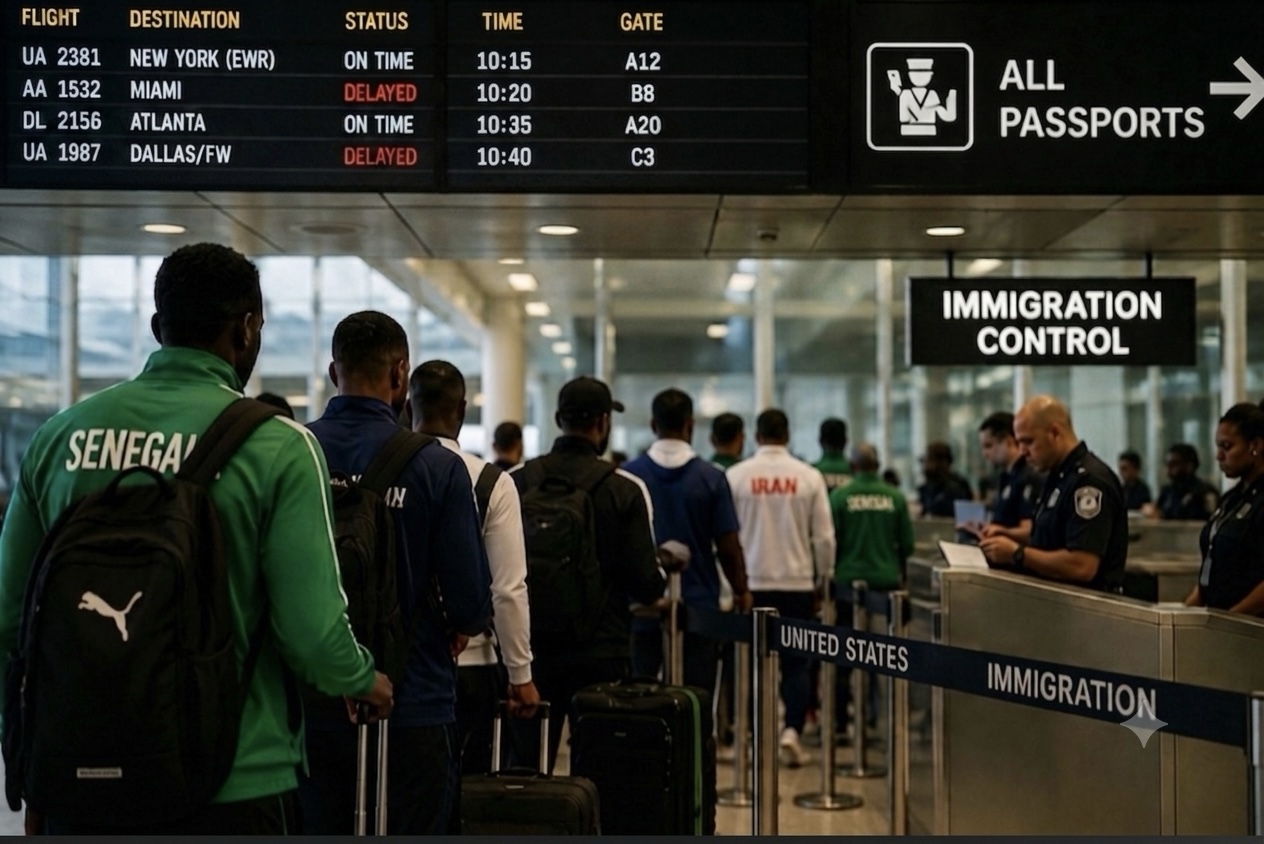
Another incident that generated significant discussion involved Senegal. Images and videos showing members of the Senegalese delegation undergoing extensive airport security screening spread rapidly across social media. The footage quickly sparked debate among African supporters, with many questioning why a national team delegation was subjected to such intensive procedures while preparing for the world’s biggest sporting event. Senegal’s football federation later said the screening followed standard airport security procedures, but the images continued to fuel discussion online and became one of the most widely shared World Cup stories across African social media platforms.
Cameroon-born Swiss striker Breel Embolo also found himself caught in the growing visa controversy. Embolo was born in Yaoundé before moving to Europe as a child and eventually becoming one of Switzerland’s biggest stars. Just days before the tournament, his travel authorization was placed under review, creating uncertainty around whether he would be able to join the Swiss squad. After additional procedures and documentation checks, he eventually received clearance and linked up with his teammates.
Iran also faced major challenges ahead of the tournament. Reports indicated that fifteen members of the Iranian delegation were denied visas, forcing the team to make special arrangements before traveling. The restrictions created logistical difficulties and became another example of how immigration issues have influenced preparations for several World Cup participants.
Iraq experienced its own controversy when star striker Aymen Hussein was detained and questioned for several hours upon arrival in the United States. The situation attracted widespread attention because Iraq is appearing at its first World Cup in decades. A member of the Iraqi media delegation was ultimately denied entry, further increasing concerns about how some participants were being treated ahead of the competition.
The Uzbekistan national team also became part of the conversation after footage showing players and staff undergoing extensive security screening circulated online. Images reportedly showing detection dogs inspecting luggage and equipment quickly spread across international media platforms, adding to growing criticism that security procedures have become one of the dominant stories before kickoff.
Supporters have not escaped the problems either. Some Scottish fans who had already secured travel authorization saw their approvals revoked shortly before departure. Others from different countries spent large sums on flights, hotels, and match tickets only to face visa rejections. For many supporters, the financial losses have been substantial and have left them unable to attend a tournament they spent years dreaming about.
With the opening match now only hours away, soccer should be the main focus. Instead, discussions about visas, border controls, airport screenings, and travel restrictions have become some of the defining stories of the tournament’s buildup. For African fans especially, the exclusion of Omar Abdulkadir Artan remains the most painful example. A referee who earned his place through talent and hard work will watch from home while the tournament he prepared years for begins without him. As the World Cup kicks off, many supporters hope the conversation will finally return to the players and the game itself rather than the controversies that have overshadowed the road to kickoff.
Discover more from The HotJem
Subscribe to get the latest posts sent to your email.