



The Unusual Story Behind Cape Verde Goalkeeper Vozinha’s Name
The FIFA World Cup often produces unforgettable moments that inspire generations. Sometimes those moments influence more than just the players on the field. They shape the lives of people watching thousands of miles away. For Cape Verde goalkeeper Vozinha, his journey to the 2026 FIFA World Cup began before he could even walk, speak, or kick a ball. It started with a Brazilian defender whose performances at the 1986 World Cup captured the imagination of a soldier in Cape Verde.
Vozinha was born as Josimar José Évora Dias on June 3, 1986, in Mindelo, one of Cape Verde’s most vibrant cities. At the time of his birth, the World Cup in Mexico was captivating soccer fans around the globe. Among those following the tournament closely was Vozinha’s father, who was serving as a soldier. While watching Brazil’s matches, he became fascinated by a right back named Josimar.
Josimar’s own World Cup story was extraordinary. Brazil had arrived in Mexico as one of the favorites to win the tournament. However, events before the competition created an unexpected opportunity. Renato Gaúcho was dropped from the squad after breaking team rules, and his teammate Leandro chose not to travel in solidarity. Their absence opened the door for Josimar to receive a surprise call-up.
When Brazil’s starting right back suffered an injury, Josimar was given his chance. He made the most of it in spectacular fashion. Against Northern Ireland, he scored a stunning long-range goal that remains one of the most memorable strikes in World Cup history. He later scored another powerful goal against Poland. By the end of the tournament, Josimar had earned a place in the World Cup Best XI, becoming one of the breakout stars of Mexico 1986.
Back in Cape Verde, the Brazilian defender’s performances left a lasting impression on Vozinha’s father. When his newborn son still needed a name, he sent two suggestions home. The first was Jorge Valdano, inspired by the famous Argentine forward. The second was Josimar. That choice would eventually connect a Cape Verdean child to one of the most remarkable stories of the 1986 World Cup.
As he grew up, young Josimar developed a passion for soccer. Unlike his Brazilian namesake, who was known for attacking runs and powerful shots, he found his place between the goalposts. Over time he earned the nickname Vozinha, a name that would become familiar to soccer fans across Africa.
His path to success was far from easy. Cape Verde is a small island nation with a population of only a few hundred thousand people. For many years, the country was not considered a major force in international soccer. Players often had to work harder than their counterparts from larger nations to gain recognition and opportunities abroad.
Vozinha built his career step by step. He played club soccer in Angola, Moldova, Cyprus, Slovakia, and Portugal. Each move brought new challenges, but Vozinha remained focused on improving his game and establishing himself as a dependable goalkeeper.
His dedication eventually earned him a place in the Cape Verde national team. He made his international debut in 2012 and quickly became one of the squad’s most important figures. His leadership, consistency, and experience helped guide Cape Verde through some of the most successful periods in the nation’s soccer history.
Over the years, Vozinha represented Cape Verde at multiple Africa Cup of Nations tournaments. The Blue Sharks, as the national team is known, gained respect across the continent for their organization, discipline, and ability to compete against stronger opponents. Vozinha became one of the symbols of that progress.
What makes his story even more inspiring is the patience it required. In an era where many players reach the World Cup in their early twenties, Vozinha had to wait decades for his opportunity. While younger stars grabbed headlines around the world, he continued working, competing, and representing his country whenever called upon.
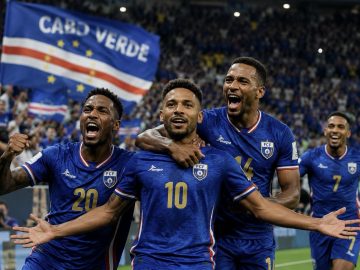
That perseverance was finally rewarded when Cape Verde qualified for the 2026 FIFA World Cup, the first World Cup appearance in the nation’s history. For a country with limited resources and a small population, qualification represented a historic achievement. It was proof that determination, planning, and belief can help even the smallest nations reach the highest level of international soccer.
For Vozinha, the achievement carried an even deeper meaning. Forty years after being named after a Brazilian World Cup hero, he found himself living his own World Cup dream. The tournament that had inspired his name now became part of his personal story.
His journey resonates strongly with African communities around the world. Many people in the African diaspora understand the importance of heritage, identity, and perseverance. They understand what it means to carry a name, a culture, or a dream across generations. Vozinha’s story reflects those values perfectly.
It is also a reminder that soccer’s greatest stories are not always about lifting trophies. Sometimes they are about resilience. Sometimes they are about waiting years for an opportunity. Sometimes they are about honoring a dream that began before a person was even old enough to understand it.
As Cape Verde steps onto the World Cup stage for the first time, Vozinha stands as a symbol of how far the nation has come. His name was inspired by one unforgettable World Cup story. Four decades later, he has become part of another.
The little boy named after a Brazilian defender has grown into a national icon. The soldier who watched Mexico 1986 could never have imagined where that choice would lead. Yet through determination, hard work, and an unwavering commitment to his country, Vozinha transformed a World Cup-inspired name into a World Cup legacy of his own.
Discover more from The HotJem
Subscribe to get the latest posts sent to your email.